


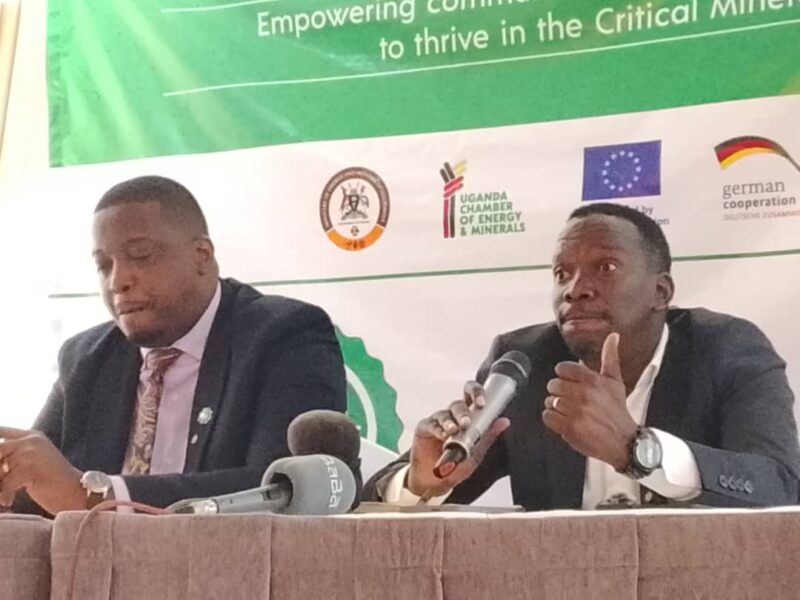
The Uganda Chamber of Energy and Minerals has launched a new grant initiative aimed at formalising Uganda’s artisanal and small-scale mining (ASM) sector.
Dubbed the Training, Equipping, and Nurturing to Thrive (TENT) initiative, the one-year programme—valued at 800 million shillings—is being implemented under the guidance of the Ministry of Energy and Mineral Development.
The initiative seeks to provide critical training and equipment to transform informal mining operations into professional, sustainable enterprises that can contribute more directly to Uganda’s economy.
According to Humphrey Asiimwe, the grant will support activities across five regions and ten strategic districts, with a focus on high-value mineral chains. The project aims to formalise operations by transitioning at least 20 ASM groups into legally registered cooperatives compliant with taxation, environmental, and safety regulations.
“As part of this initiative, we are bringing together academia, industry, and government to drive policy dialogue and improve the investment environment, fiscal policy, taxation, environmental protection, and market access in Uganda’s mining sector,” Asiimwe said.
Uganda’s artisanal and small-scale mining sector currently contributes over 90 percent of the country’s mineral production and supports an estimated 200,000 livelihoods—nearly half of them women.
However, fewer than 20 percent of operators are formally licensed. This has limited access to financing, exposed miners to exploitation, and weakened compliance with environmental, legal, and safety standards.
Engineer David Ssebagala, the initiative’s focal person at the ministry, says the project is a significant step toward addressing illegal mining and advancing the objectives outlined in the Mining Act 2025 and its regulatory framework.
He notes that while Uganda has established a progressive mining licensing regime that allows miners to transition from small-scale to large-scale operations, legislation alone is not enough to achieve full formalisation.
“Government has also introduced interventions such as biometric registration of artisanal miners and encouraging them to form cooperatives. The TENT initiative strengthens these efforts by supporting miners to formalise their operations,” Ssebagala explained.
By 2030, the initiative aims to formalise up to 100,000 artisanal miners and establish 50 model cooperative enterprises. This is expected to increase the sector’s contribution to GDP from an estimated 0.5 percent to over 3 percent within five years.
