



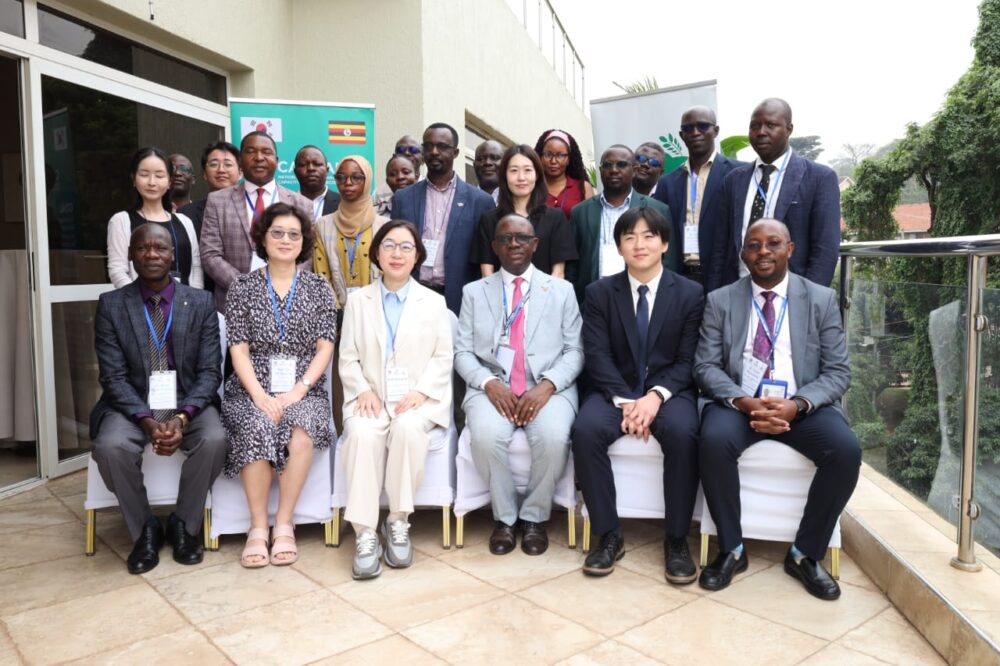
Uganda has reaffirmed its commitment to strengthening cervical cancer prevention and early detection following the inaugural Project Management Committee (PMC) meeting for the National Cancer Management and Capacity Building Project (CANCAP_UG).
The meeting, held on 26th February 2026 in Kampala, brought together officials from the Uganda Cancer Institute (UCI), the Ministry of Health (MoH), and the Korea Foundation for International Healthcare (KOFIH).
The three-year pilot initiative, backed by a USD 3 million investment under a partnership agreement signed in 2023, aims to strengthen prevention and early detection systems to improve access to cancer care services across Uganda.
Since implementation began, the project has recorded significant progress. More than 45,000 women aged 25–65 years have been screened for cervical cancer in Kampala City, Mbarara District and Mbarara City.
Over 3,000 women who tested positive have received timely treatment for pre-cancerous lesions at supported health facilities.
KOFIH Uganda Country Director, Mr. Dohoon Kim, announced the introduction of AI-assisted VIA screening devices to enhance the speed and accuracy of screening.
“We are committed to supporting Uganda in building sustainable systems for early detection and effective management of cervical cancer,” Mr. Kim said.
Dr. Daniel Kyabayinze, Director of Public Health at the Ministry of Health, emphasized that cervical cancer is preventable and treatable when detected early.
He noted that early detection and management of HPV infections significantly reduce the risk of progression to cancer.
Dr. Kyabayinze expressed concern over the increasing number of women affected by cervical cancer and described the collaboration between UCI and KOFIH as a major step toward expanding access to prevention and treatment services.
During the meeting, Prof. Oh Jin-kyoung from the National Cancer Center of the Republic of Korea shared lessons from Korea’s cervical cancer prevention model, highlighting expansion of screening programs and integration of technology to improve patient outcomes.
The meeting was attended by senior officials from the Ministry of Health, Uganda Cancer Institute, Kampala Capital City Authority (KCCA), Mbarara City and District health offices, and consultants from the National Cancer Center of the Republic of Korea.
