


Chipo Brenda
Stakeholders focused on protecting media rights in Uganda have expressed growing concern over the rising impunity against journalists in the country. According to recent statistics, 15% of journalists in Uganda have not received justice when faced with challenges from authorities. This issue is not unique to Uganda but is a recurring problem across many East African countries, as highlighted by Misako Ito, the Regional Advisor for African Communication and Information at UNESCO.
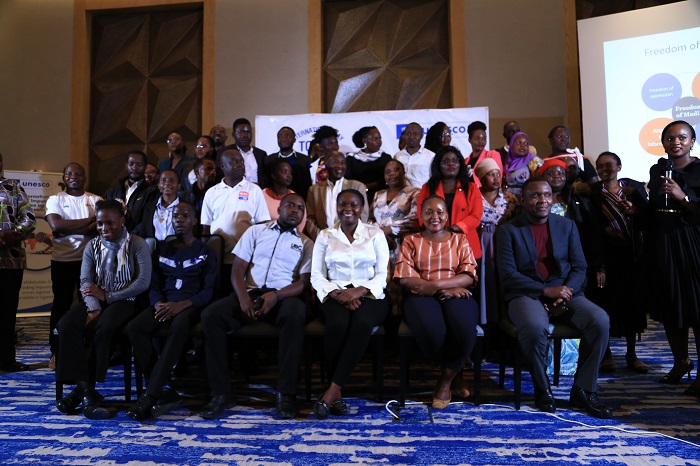
In a multi-stakeholder dialogue on ending impunity against journalists in Uganda, Misako Ito attributed the continuing impunity to lawmakers who fail to take the issue seriously. Her comments came as the world marked the International Day to End Impunity for Crimes Against Journalists. A number of stakeholders gathered in Kampala to discuss ways to address this growing concern, which has forced some journalists to leave the profession.
According to research conducted by the Human Rights Network for Journalists (HRNJ), Uganda has seen a disturbing rise in the assault of journalists, despite ongoing engagement with authorities about the role of the media. The findings underscore the challenges faced by journalists in the country, as they continue to be subjected to violence, harassment, and intimidation.
Gilbert Sendugwa, Executive Director of the African Freedom of Information Centre (AFIC), emphasized that despite the challenges, their efforts to promote press freedoms in Uganda will not cease. Grace Nantale from AFIC presented research on the risks faced by journalists across Uganda, Kenya, and Tanzania, including threats of death in conflict zones and criticism from local communities. Nantale further highlighted the specific dangers faced by women journalists, particularly with the rise of digital media and technology. “With the advent of technology, women are increasingly vulnerable to risks associated with gender-based violence, including online harassment and insults,” she explained.
Dr. Dominic Lali Mundrugo-Ogo, the Assistant Secretary-General of the Commission, stated that the goal of the dialogue was to bring together various stakeholders to discuss solutions for ending impunity against journalists. He reaffirmed UNESCO’s commitment to working with member states to monitor and promote press freedom globally.
While the police have been identified as a key actor in infringing on journalists’ rights, as per the press index report, Assistant Inspector General of Police Charles Kataratambi emphasized that the police have a positive working relationship with journalists. “We offer training not only to journalists but also to communities to ensure that we work collaboratively in promoting law and order,” Kataratambi said during the dialogue.
In response, Robert Ssempala, Executive Director of the Human Rights Network for Journalists (HRNJ), called on the Ugandan government to reinstate the United Nations High Commissioner for Human Rights in Uganda. He argued that the UN body is the only institution that can effectively monitor and address the inconsistencies in the protection of human rights in the country.
Journalists in Uganda face numerous challenges, including physical assault, low pay, poor working conditions, lack of contracts, and limited access to the internet. Additionally, new technologies are creating additional hurdles for media professionals. These factors are hindering the growth and sustainability of the journalism industry in Uganda.
