


Members of Parliament have ordered management of the National Social Security Fund (NSSF) to submit documentary evidence explaining the delayed completion of the Temangalo Housing Project, a flagship real estate investment that began construction in 2020 but remains unfinished.
The directive followed revelations in the 2025 Auditor General’s report, which shows the project is only 63 percent complete despite earlier expectations that it would be finalized by now. Lawmakers say the slow progress raises accountability concerns and could jeopardize workers’ savings invested through the Fund.
The Temangalo project has long been controversial, tracing its origins to a disputed Shs11 billion purchase of 366 acres of land in 2008. While construction eventually commenced over a decade later, lingering ownership disagreements and legal wrangles continue to cast uncertainty over the development’s future.
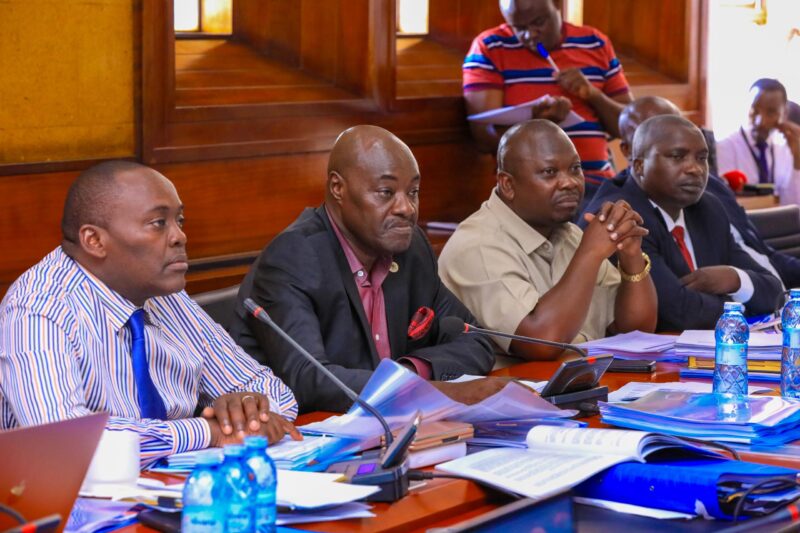
Appearing before the Parliamentary Committee on Commissions, Statutory Authorities and State Enterprises (COSASE), an NSSF delegation led by Executive Director Patrick Ayota attributed the delays to disruptions caused by the COVID-19 pandemic, contractual complexities, and multiple court disputes related to the land acquisition.
Committee chairperson Medard Lubega Sseggona said the explanations highlighted deeper governance and risk management concerns.
Legislators were informed that the land vendor had sought a property swap arrangement involving a portion of the estate, a development that lawmakers fear could expose the Fund to fresh legal and financial risks.
Parliamentarians expressed alarm that unresolved ownership claims, including competing interests from third parties, could stall progress and erode confidence among prospective homeowners.
Sseggona warned that continued wrangles may undermine investor trust and directed NSSF officials to provide updated evidence detailing the project’s legal safeguards, status reports, and protection measures.
Rakai District Woman MP Juliet Kinyamatama questioned the circumstances under which vendor Amos Nzeyi and his partners attempted to renegotiate land arrangements after ownership had already been transferred to the Fund.
She pressed officials to clarify the legal grounds for such a request, arguing that once land changes title, subsequent claims should be clearly justified.
“What conditions did he give you? It’s the same person that sold us that land, then he wants a swap. under what condition? You’re already in possession of the land, it’s in your title, it’s in your name, so…”-Kinyamatama
In a brief response, Patrick Ayota said that that is our country exactly that, Where somebody out of the blue will come back and try to claim whatever it is.
Workers’ MP Charles Bakkabulindi echoed these concerns, likening the situation to selling a vehicle and later demanding a critical component (Engine) back, an analogy he said illustrated the confusion surrounding the arrangement.
NSSF Deputy Executive Director Gerald Kasaato pointed the Fund’s position to a Memorandum of Understanding (MoU) negotiated after the initial land purchase agreement.
According to Kasaato, the MoU allowed the vendor to retain part of the original land in exchange for alternative property, subject to strict conditions: equivalency in value, suitability for development, and free from encroachers.
He acknowledged that questions about the MoU’s legality arose but noted it was validated through an arbitration process overseen by the courts.
Nevertheless, lawmakers remained unconvinced about safeguards against encroachment and demanded documentary proof of land re-surveying and protective measures.
The committee resolved to continue its investigation, emphasizing that protecting workers’ investments must remain paramount.
Its findings will inform an accountability report to be tabled before Parliament to determine the fate of public investments.
