


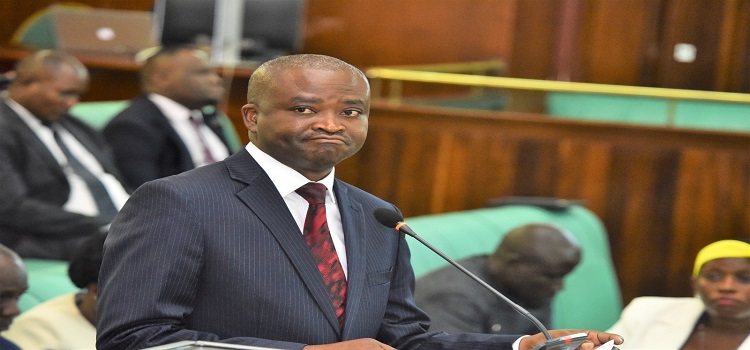
Government has indicated its intention to take over the processing of the National Legal Aid Bill, 2022, citing unresolved concerns over how the proposed legal aid scheme would be financed.
During plenary at the Parliament of Uganda on Thursday, Attorney General Kiryowa Kiwanuka said government supports the principle behind the Bill but needs time to harmonize key provisions, particularly its funding mechanism.
“Currently legal aid is handled on an ad hoc basis through the Justice Centres under the Justice, Law and Order Sector,” Kiwanuka told Parliament during the second reading of the Bill.
He added that although government appreciates the initiative by the private member who introduced the legislation, discussions with the Ministry of Finance are necessary to identify a sustainable funding model.
“We do agree with the principle behind the Legal Aid Bill. However, what we have not been able to reconcile are some salient aspects, particularly the financing of this Bill,” Kiwanuka said.
The Attorney General requested the House to allow government to take over the Bill under Rule 147 so that it can be harmonized and later reintroduced jointly with the private member.
Aogon Welcomes Government Support but Sets Conditions
The Bill was introduced by Kumi Municipality Member of Parliament Silas Aogon as a private member’s initiative aimed at improving access to justice for poor and vulnerable Ugandans.
Speaking to Eyewitness shortly after the plenary sitting, Aogon welcomed the government’s willingness to work with him but emphasized the need for firm commitments to ensure the Bill is eventually enacted.
“As a private member, I am barred under Article 93 from imposing a charge on the Consolidated Fund for funding the National Legal Aid Scheme,” Aogon said.
He explained that government involvement would make it easier to secure financing and move the Bill forward.
Aogon outlined four key expectations from government, including facilitating access to a Certificate of Financial Implications, fully financing legal aid services, prioritizing the Bill within the first year of the next Parliament, and reporting to Parliament every three months on progress.
“When government does that, then I know government is serious and determined to support its citizens because access to justice, for me, is a right,” he said.
Why Legal Aid Matters
According to Aogon, the proposed law would enable poor and vulnerable citizens to access legal representation in courts of law.
He noted that many Ugandans cannot afford lawyers, especially in cases involving land disputes, family conflicts, and property ownership.
“You know how lawyers in Kampala can be expensive. Someone may be asked for two million shillings just for fuel to travel to the village. Where does the common person get that money?” he said.
Without legal aid, he warned, the justice system risks favoring wealthy individuals who can afford legal representation.
“If we don’t grant legal aid services, the result is an imbalance in representation before courts of law where the rich always win cases against the poor,” Aogon added.
He also argued that lack of access to legal advice can push citizens toward violent alternatives such as mob justice when they feel the legal system is inaccessible.
Background of the Bill
The National Legal Aid Bill, 2022 seeks to regulate the provision of legal aid services and expand access to legal representation for indigent and marginalized people across Uganda.
